Friday, July 20, 2012

FAMOUS TERRITORY WRITER'S TYPEWRITER SURFACES IN DARWIN


Melbourne journalist Kim Lockwood was given an unexpected family heirloom on a recent visit back to Darwin – the German Neumann Erika typewriter (above) his father, the renowned Melbourne Herald correspondent and author, Douglas Lockwood, used to write his reports and extremely popular Territory books from 1947-68. Dr Richard Giese, of Fannie Bay, bought the typewriter for $5 at a lawn sale in Darwin when Doug cleared out his possessions before taking up the post as managing editor of two papers in Port Moresby, which he combined into the first PNG national daily, The Post Courier.


Dr Giese heard from Grant Tambling that Kim was in town and rang Kim and arranged to return the typewriter to the Lockwood family. He came across the typewriter while sorting out the possessions of his late mother, Nan, who contributed much to the Darwin community. Kim says his father, in Darwin at the time of the Japanese bombing, probably brought the typewriter back from the Dutch East Indies, where he had been a war correspondent. It still works, he reports, though the ribbon is fragile. Kim has a 1937 Quiet Imperial 55, with a massive black iron frame, bought from reporter Rex Clark, which he used when he worked at the NT News from 1968-71.

During his recent visit, he and his wife, Jude, went out to Moulden and photographed the street named after Douglas -- Lockwood Court. As part of their visit to the Top End, they also drove out to Kakadu and, on what would have been his father’s 94th birthday, went to Malabanbandju Lagoon where Kim had scattered his father’s ashes in 1982. A large Jabiru floated down and looked at them.

Kim’s mother, Ruth, now 99, was well known in Darwin. She was evacuated on the last plane out before the bombing, just after the fall of Singapore. On their return to Darwin, Ruth was involved in several community organisations, including the running of the North Australian Eisteddfod. Douglas died while working on another book about selections from the works of Bill Harney and Ruth completed the project, which was published by Viking O'Neil in 1990 as A Bushman’s Life. Both Kim and his sister, Dee Mason, are published authors.

(PAINFUL) FOOTNOTE : Kim’s sister Dale, now Dee, trod on a stonefish in the Dry season, at Lameroo, outside the walls of the baths. She was screaming with pain as Kim carried her up the cliff and dinked her home on his bike. Their father rushed her to hospital, which had only the previous week or so been delivered its first stonefish anti-toxin.

MILLIONAIRE'S BOOK LINK WITH DARWIN


"Golden Greek" Constantine Souvlis plants a kiss on former Queensland Premier Anna Bligh when he was a finalist in the Australian of the Year Queensland Awards .

The son of a poor Greek pearl diver who worked for the Paspalis / Paspaley family in Port Hedland and Darwin, is now worth $100 million and tells how he made his fortune in a new book to be launched on July 27. He is Constantine Souvlis, 86, a property developer and retailer on Queensland’s Fraser Coast, his biography- KING CON-is dedicated to "every Greek who came to Australia to find a better life".

The book has been written by former News Limited, Fairfax, APN News and Media, Channels 10 and 7 journalist and broadcaster Toni McRae, who spent a few months in Darwin in the 1990s editing the then Palmerston Suburban, now the Darwin Sun.

Mr Souvlis AM says he learned from his father Mick how hard work could pave the way to making big money."The trouble was my father forgot all that after he left the Paspaleys and went out on his own commercially fishing and running fish and chip shops with my mother Chrissanthi. He turned to gambling and women and that was the end of the father I used to admire. So I determined never ever to be like him and I made my own way in life."


Mick Souvlis, a sponge diver on the remote and rugged Greek island of Kastelorizo, shipped to Sydney around 1911 and became attached to the Theodosis Paspalis family , destined to become Australia’s foremost pearl merchants. Paspalis senior, a former tobacco merchant , and his family went to Port Hedland where he set up a grocery store and he bought a share in a pearling lugger. Theodosis died five years later , but his sons Michael and Nicholas and daughter Mary continued their father's interest in pearling.


Mick Souvlis followed Nick to Darwin and worked for him in the pearling industry here for at least a year before eventually moving to Ingham in Queensland with his new wife Chrissanthi. In Ingham, the couple’s first child, Con, was born in September 1925. Con moved to Brisbane with the family and then to Perth where he signed up to fight Japanese in WW2 on the island of Bougainville. After the war , he and his mother bought a fruit shop in Brisbane and in the 1950s Con moved to Maryborough on the Fraser Coast, took one look at the nearby fishing village of Hervey Bay and “I smelt money”. King Con’s foreword has been written by His Eminence, Archbishop Stylianos, Primate of the Greek Orthodox Church in Australia.

***King Con’s recommended retail price is $30 and books can be obtained from July 27 from Con Souvlis’ Betta Electrical Store at 138 Freshwater Street, Torquay, Queensland, Fraser Coast, Qld; 4655. Betta Store Phone: 4125 2555 and ask for Rosemarie Wright to place orders.Mr Souvlis’ Betta retail store website is: consouvlis@bettastores.com.au

Wednesday, July 18, 2012

A TALE OF TWO LIVELY NEWSPAPERS -The Pete Steedman Chronicles


Steedman arrived back in Melbourne from Darwin shortly before the 1975 Federal election caused by Sir John Kerr’s sacking of the Whitlam Government. He called at the ALP head office to offer his assistance and was given responsibility for getting out the “ethnic” vote. This involved him establishing a communications system to get relevant information to all the differing and often warring groupings in the immigrant community, provide translators, targeted literature and consultation with and between groups. The ethnic vote was the only “grouping” that stayed with Labor in Victoria when the Whitlam Government was swept from office.

Soon after, when Bob Hogg was appointed ALP Victorian secretary , Steedman was made editor of the party’s monthly newspaper, Labor Star , following the death of Colin Beadnall. Steedman was described in a newspaper article as a confident , tough-talking bodgie of Melbourne’s Left. It quoted Steedman as saying he had joined the ALP at its lowest ebb, unlike so many he saw as opportunists who signed up when Whitlam won government . Previously, he said, he had run an independent Left line, but got sick of plotting the revolution every weekend at home with three bomb throwers, so got into a party of mass support.

Steedman stated the Star had to change from one which just ran parliamentary speeches and reflected the views of the ruling clique, to one that allowed dissent and discussion aimed at debating or formulating policy. It became his baby for seven years ,for which he received no emolument , and he opened it up to “everybody.” As long as they did not personally slander anyone , contributors could express themselves on any issue, keeping it within the Party and not the daily Press. Under his virtual one man band control, the Star changed from a rather bland suburban paper publication into a “more grown up “ production, ready for a scrap , with much more content and lively headings such as FEARLESS FRASER FINALLY FREAKS and TIME TO CLEAN THE CROOKS OUT OF PARLIAMENT.

With a print run of 30,000, it was distributed to all Party members, by union workers on shop floors and, because it was now becoming meaningful, anxiously awaited by the Liberals. The Murdoch press , it was said, loved to mischieviously quote it out of context. At the time there was a lot of factional brawling in the party and the open pages policy helped ease the swellings of the heart . Naturally , the Liberals pounced on each edition to launch attacks about divisions, disunity and rows.

Labor Star ran discussion papers where different views to the current party line were aired. Some of the attitudes expressed in those columns eventually became policy. The new open policy was beneficial , he believed , and played a part in a growing consensus approach which developed in Victoria. Steedman hoped to take the heat out of some of the internal party conflict by restricting it to the pages of Labor Star while the Party was in the process of reinventing itself under the leadership of Hogg.

From Steedman’s extensive files came the above issue of July 23, 1979 , of 24 pages. It contains an extensive and lively letters to the editor section under the heading FEEDBACK , cartoons from architect /illustrator Peter Burleigh ,his Bulldust Diary series currently running in Little Darwin, and Rick Armor now an internationally acclaimed artist and sculptor who in 1999 was appointed the official war artist to East Timor by the Australian War Memorial .

Throughout his publishing career Steedman has had a great affinity for local and overseas cartoonists whose work often made clear involved, serious issues and caused people to think . Leunig , with whom he was involved back in the university days in Melbourne , is a classic example.

There is a two page spread for the Myer Music Bowl rally to mark the nuclear bombing of Hiroshima anniversary that includes coverage of US bases in Australia- PineGap, North-West Cape, Nurrungur and Omega . It also raises the nuclear power issue in Australia and the waste disposal problems. Three tribal elder women from Oenpelli- Hanna, Rachel and Barbara- are shown with three Filipinos in a page expressing concern about proposed nuclear power in the Philippines and the Pacific islands.

Sue Gavaghan , who helped out with regular , lengthy interviews , has two pieces in the paper . Another contributor, journalist and author, Larry Noye ,covered a dinner for Dr Jim Cairns , and wrote an extensive feature on veteran politician Reg Pollard with memories of ALP Prime Ministers John Curtin and Ben Chifley. Noye ,who wrote a book on the colourful King O’Malley , is still actively writing . Special mention is made of 95 year old, pipe smoking , Charlie Street, of Wonthaggi, who had been awarded the ALP’s 40-year-service medal.

Senator John Button provides the Canberra Diary and the Victorian parliamentary session is covered in a well written column by John Templeton. The Star also highlights the mammoth book fair to be held in the Fitzroy Town Hall, organised by the Melbourne Assembly of the ALP.

An unusual story is headed THE GOLDEN YEARS OF GOUGH-AN MGM MUSICAL highlighting the rise and fall of the Whitlam Government. It asks : Have you ever seen Gough Whitlam as a song-and dance man , singing in the rain like Gene Kelly? Or Sir John Kerr, dancing in top hat, white tie and tails, like Fred Astaire. Or Mal Fraser wooing the electorate by singing ,"Won’t you change partners and dance with me? ". Or Joh Bjelke-Petersen initiating a new dance craze, the Gerrymander?

Staged at the Grant Street Theatre it was put together by two theatre writers and directors, Albert Hyunt and Roberta Bonnin,working with drama students from the Victorian College of the Arts. The story ends with advice to book early for the show because , like the Whitlam Government, it is only scheduled for a short run. Next to this write up is an illustrated report about why VicRail employees are taking action against the government because of low pay and poor conditions. The Star was used as a tool to promote ALP candidates in elections by inserting colour pieces about the worthy person standing which were inserted in the paper and distributed throughout the electorate.

A NATIONAL LABOR PAPER?

There was talk at the time of the need for the Labor Party to have a national newspaper like the Daily Mirror in Britain . Steedman was connected to an attempt to launch such a venture in 1976 . It involved two groups –Sydney and Melbourne . The Sydney one failed, he says, because it was full of basically dissident newspaper journalists who wanted the office structured like a newspaper, running " tits and bums " and other items like that, which would have made it like a Labor Truth . The capital to run such a paper would have been impossible to raise. On the Melbourne side, he explained , they got bogged down with ideological problems and the size and membership of the collective that would run the paper.

While saying there may well have been a need for such a paper at the time , it would have to be pragmatically thought out because it would have to sell to the public . People would not want a paper full of Labor Party propaganda.


TRAIL BLAZING ABORIGINAL PAPER


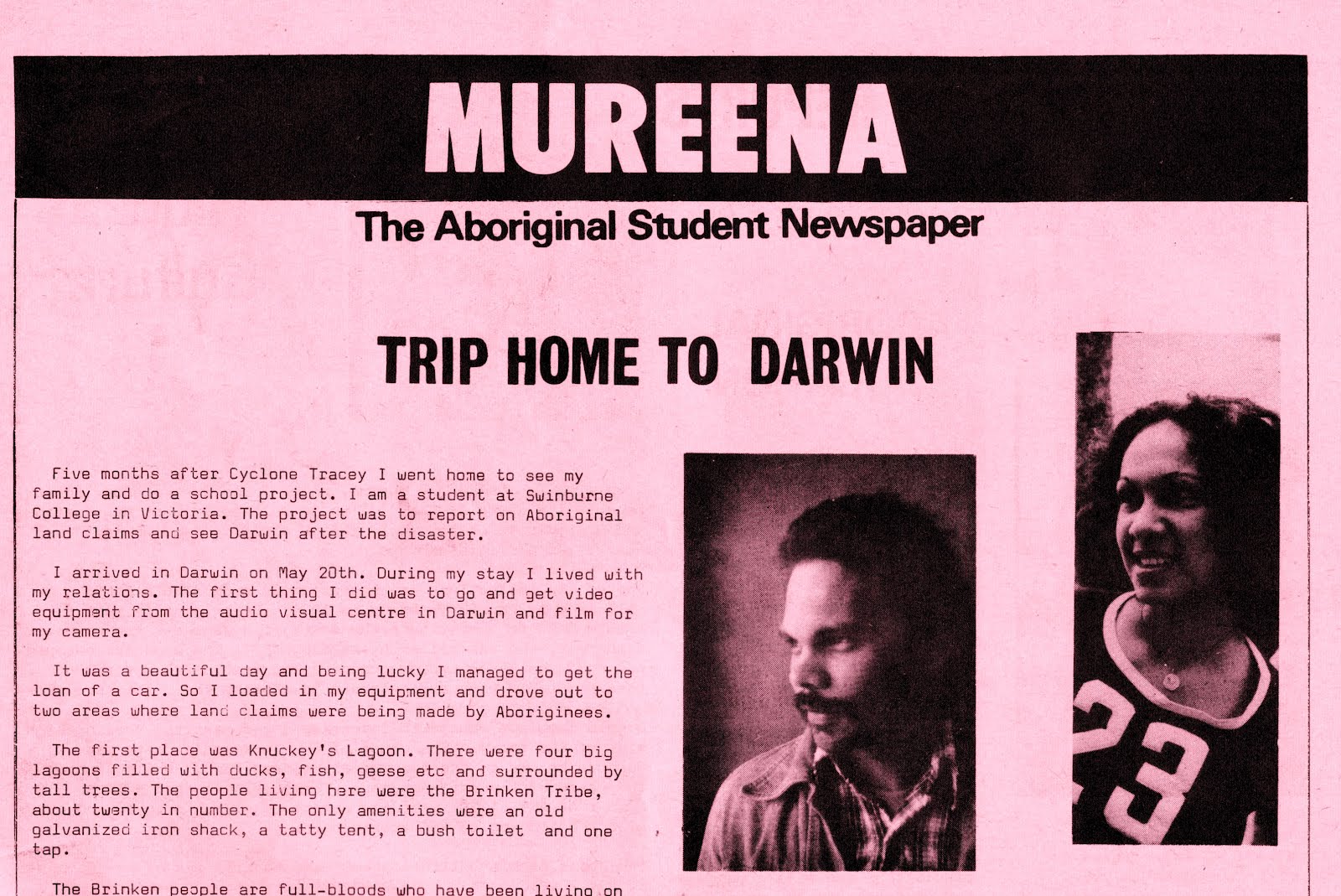
While running the Star, Steedman was also involved in occasional lecturing at Swinbourne College of Technology and the Caulfield Institute of Technology in Urban Sociology and Marketing. At Swinbourne he was also lecturer in the Community Development course, specifically designed to bring young Aboriginals into the mainstream education system. The class produced the Aboriginal student newspaper, MUREENA, meaning Message Stick, which ran for several years.

Students came from all over Australia and included several activists - the late Bruce McGuiness , responsible for the first Aboriginal initiated national news-sheet, National Koorier , and Gary Foley, co-founder of the Canberra tent embassy, a leading figure in the Redfern Legal Aid Centre ,Sydney . Many of the current generation of Kooris running health centres and activists in other areas of Aboriginal rights were involved . One well known activist, Robbie Thorpe, directs the online TREATY REPUBLIC, committed to issues relating to Australian history, Indigenous sovereignty , the lack of a treaty, land rights and justice , genocide , national denial and a call for the nation to pay the rent, got his start in this course . One day a week, students did "field work " – wide ranging work experience .

The edition featured above contains an illustrated front page story about two students , Phillip Shields and Carol Dowling, who had come to Darwin after Cyclone Tracy and reported their observations under the heading TRIP HOME TO DARWIN. Armed with a video, Shields reported on land claims. At Knuckey’s Lagoon, where about 20 members of the Brinken Tribe lived, their only facilities were an old tin shack, a tatty tent , a bush toilet and one tap. They had been living on the land for centuries, had little Western education and wanted to establish a poultry farm , grow tropical fruit, set up a health clinic , craft shop and transit and permanent camping sites.

In the case of the Kulaluk people, Shields said they were in a worse situation.Numbering about 10 individuals, they lived in one tent , there were not taps, toilets , showers or other amenities. A water truck gave them water and they lived on pension and endowment cheques. Both groups complained about the incessant talk connected with their land claims .

Carol Dowling detected a lack of communication between Northern and Southern blacks. She gained the impression that the Northerners believed those from south stirred up "all the trouble" , both politically and socially. Because of this problem and great distances between groups, she believed there was an urgent need for a national Aboriginal magazine . There was need for more communication of a personal nature –visits and trips to outlying places such as the NT.

Acting on her observations, the eight page newspaper contained a report headed WHAT ABOUT A NATIONAL BLACK NEWSPAPER . It envisaged such a publication with a staff of 43 run at a cost of $100,000. It included a layout chart for the paper with reporters in each state, cartoonists and artists . Steedman is described in the article as "our friend and communications teacher." When it came to the position of managing editor , it asked who that person could be - "Pete?"

The justification for such a publication reads: We need a strong, healthy, concerted , witty, informative , arousing, controversial and independent newspaper written and produced by blacks for blacks in this country ...We really need a paper that embraces and tells the stories and news and fights for Aborigines in all states ...There are many different groups in the national black community who think, eat, live, and forever believe differently...There is not a single thing in the whole country that all Aboriginals can relate to , except perhaps for discrimination ...

This edition of Mureena contains poetry , an unusual review by Alice Startup of the film FAREWELL UNCLE TOM dealing with slavery in America , ending with her comment that any person seeing the film should not take a weapon with them as you could end up "belting any white person" who comes along. A very light hearted view had to be taken of the film, she wrote, otherwise you would come out"absolutely fuming ."

Lennie Tregonning has an interesting article about his work experience in the Melbourne Museum , looking at the 1936 Arnhem Land collection of anthropologist Donald Thompson and also describing in detail the "toys" of Aboriginal children . Other subjects covered are Aboriginal education and the experience gained by Stephen James Thorpe being attached to the Victorian Prisons Department . NEXT EPISODE : Dramatic union and political events .

Tuesday, July 17, 2012

GANGSTERS,OUTLAWS & GATS


Bonnie and Clyde.-Library of Congress photograph.

The guns of notorious killers and bank robbers , Bonnie Parker and Clyde Barrow, will be sold at an unusual auction in America on September 30 and could fetch $200,000. Bonnie and Clyde were shot dead in a hail of bullets some 80 years ago. Clyde carried a Colt . 45 and Bonnie had a Colt .38 strapped to her thigh. Other items to be sold include Bonnie’s cosmetic case , a box of face powder and a powder puff found at the ambush shoot out. The Elgin watch which belonged to Clyde is also listed by RR Auctions in a sale of 100 lots which includes a letter penned by bank robber John Dillinger from prison and the handwritten score of Madonna Mia, a song composed by Al Capone when he was in Alcatraz.

Monday, July 16, 2012

AUDACIOUS MEDIA DIAGNOSIS: WHAT'S NEWS , PUSSYCAT?


Does this feline togetherness represent local Darwin media hepcats ?

The perceived shortcomings of the local media were discussed over lattes during a boisterous gathering in a cool spot . A longtime Darwin resident said the trouble with scribes in this town is that they graze in packs , drink with each other, tell each other what great shakes they are, and –wait for it - THE BUGGERS EVEN BREED TOGETHER!

Naturally, the latter part of this audacious psychoanalysis caused much spilling of beverage as listeners choked and snorted . Warming to the response to his profound words, while his audience mopped up the spillage and nose dribbles, he pointed out this parallel universe kind of existence inevitably resulted in a basic sameness of the media coverage where there is really extensive diversity in town and many issues crying out for in depth, basic reporting , not shallow coverage and flim flam.

Signs of taking in each other’s washing were increasing , he continued . Apart from the Channel 7 feeble rehash of local news , he cited the NT News and the ABC obviously lifting stories from each other . Of course, this is nothing new in the history of news gathering , but he claimed it was much more evident with the reduction of staff at the News and centralising layout of the paper in Adelaide.

Sunday, July 15, 2012

UNUSUAL WAR FIND IN DARWIN


It is surprising the items of interest which turn up in Darwin . One of the latest acquisitions by Little Darwin is this war issue of the Australian weekly, The Sunday Mail, for May 17, 1916. The striking cover artwork is by Sydney Ure Smith who played a large part in promoting Australian art at home and overseas. Born London, 1887, he arrived in Australia the next year and became a draughtsman, etcher, watercolourist , publisher. His drawings first appeared in the Sydney Mail .

The year of the above publication he founded Art In Australia and in 1923 organised the Australian Art Exhibition at the Royal Academy , London. The weekly includes photograph of Australian troops and advertisements for Winchester shotgun cartridges, Buick, Daimler and Willys-Overland cars .Constable John Dyson swears by Dr Barrett’s Herbal Skin Oil. Blocks of land at the beautiful Ocean Wave Estate, Woy Woy, are being sacrificed due to the war , starting at an equivalent price of $25.

Women wanting to preserve a youthful appearance are offered Dr B. Allen’s (USA) Mexican Walnut Stain for grey hair. An article in a series about women’s work in the war deals with the SOCK DEPOT , started by Mrs Keith Jopp, Elizabeth Bay , Sydney, whose son was a lieutenant . At the time of the writing of the article ,16,637 pair of socks had been knitted .
Hats sporting ostrich feathers were all the rage at the time as shown by the above advertisement for Miller’s Feather Shop, Sydney. Our boys on the front in Egypt were using Rexona soap to overcome chafing, sunburn and minor abrasions. You could also sign up for a course on how to become a ventriloquist.

ON A WING AND A PRAYER TO SLEEPY , MODERN DARWIN

Those brave early men – and women – in their flimsy flying machines risked their lives turning Darwin into Australia’s front door . Modern Darwin commemorates those aviation pioneers with a neglected showcase in the Victoria Hotel Arcade , off the Smith Street Mall, which contains cobwebs and gecko droppings. Little Darwin pointed out this unsatisfactory situation before the 70th anniversary of the bombing of Darwin , ample time one would think for somebody in government, the DCC , tourism , the history industry to organise a quick clean out . No .

Visitors off the former Love Boat and Queen Mary 2 wandered at large about the Mall , some even looking in the Red Cross Op Shop for something of interest , oblivious of the fact that nearby were the faded names and messages of GIANTS IN THE WORLD’S AVIATION HISTORY scratched into the wall of the old Vic Hotel . In the case of Australian Bert Hinkler , Little Darwin pointed out he had been so highly regarded internationally that an American astronaut had taken a piece of a Hinkler built model plane  on an ill-fated flight. That small fragment had been retrieved from the wreckage and returned to Australia.

Two weeks ago the showcase was  inspected and  nothing had changed except for the fact that an unfortunate , babbling person , his  belongings in  a shopping trolley, was seated in front of the display case , litter of  various kinds in the nearby planters.

Another inspection a few days ago, and the same situation pertained as a wall-eyed drunk , wearing shorts , no top, a feather in his hat , tottered out of the arcade . What looked like fresh urine was splashed across some of the plants , and there was liquid and some white powder at the right corner of the wooden base of the showcase. Empty cans and a cardboard box were in the planters . This totally unsatisfactory situation was pointed out to the NT Government months ago and then personally shown to an ABC reporter , without anybody doing anything . The aeronautical winds of change are long overdue in government and media circles in this town